AI SRE Agents: When to Build vs. When to Buy
A decision framework and 3-year cost model for when to build your own AI SRE agent versus buy a platform. See the real cost of DIY agents at scale.

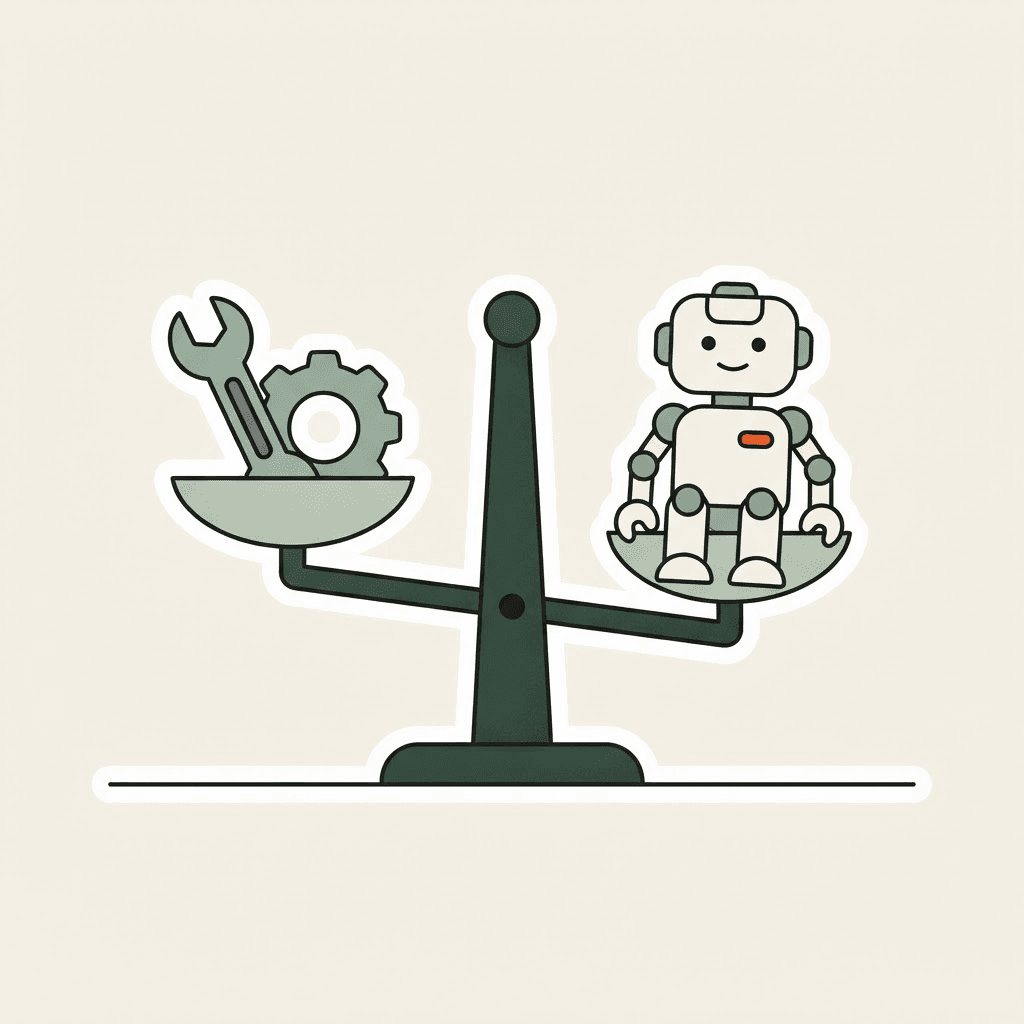
Every infrastructure team I talk to is building something with AI right now. A bot that queries logs. An LLM wrapper that summarizes alerts. A script that correlates metrics with recent deployments. The energy is real, and I am not here to discourage it.
But I am here to ask: is that the best use of your team's time?
The build-versus-buy question is not new. Every generation of enterprise technology faces it. But AI agents are different in one important way: they are deceptively easy to start and deceptively hard to sustain. A weekend prototype feels like 80% of the solution. The remaining 20% takes 18 months and three engineers you cannot afford to lose.
Here is how I think about it.
What Is the Agent Actually Listening To?
Before the cost math, there is a design question that decides the outcome, and almost nobody asks it: what is the agent listening to?
Nearly every homegrown agent is wired the same way. An alert fires, a webhook triggers, the agent investigates, it posts a summary, a human approves the fix. That is a reasonable architecture. It is also the same architecture the frontier vendors ship as reference implementations. And it shares a ceiling with all of them: it runs on the alerts you already have.
Those alerts were noisy before the agent arrived. In our 2026 survey of more than 1,000 practitioners, 83% of teams move across four or more tools during a live incident, and 78% had an incident where no alert fired at all and a customer noticed first. A faster responder does not fix either number. It chases the same noise at higher speed, and it stays blind to the same gaps.
DIY on noise is still noise.
The leverage is upstream. The question is not "can our agent answer the page faster," it is "should this page have fired, and why did the one that mattered never fire at all." Answering that means instrumenting the environment to generate the right signals in the first place, which is a different discipline from writing a good investigation prompt. It means adding latency and error-rate coverage on risky external dependencies, pruning high-cardinality noise, instrumenting blind spots like background jobs and queues, repairing broken trace context across async boundaries, and converting vanity metrics into SLO-aligned signals.
That is agentic instrumentation, and it is the part a weekend prototype never touches. Fix the underlying issue, do not just patch the alert.
Keep that in mind as you read the rest, because it changes what the cost math is actually measuring.
When Does a DIY Agent Make Sense?
Not every problem needs a platform. DIY agents work well in specific conditions:
Small blast radius. If the agent serves a single team, monitors a handful of services, and the cost of failure is low, a homegrown solution is perfectly reasonable. An agent that watches your staging environment and posts to Slack when something looks off is a fine use of a Saturday.
Outages are tolerable. If the business can absorb downtime while a human catches up, the stakes are low enough for a DIY approach. The agent is a convenience, not a safety net.
The team is not ready for full automation. Some organizations need to crawl before they walk. A DIY agent can be a useful learning tool, helping teams understand what AI can do before committing to a platform. There is real value in that education.
The pattern is clear: DIY works when the problem is small, the stakes are low, and the goal is learning rather than operating.
What Doesn't a DIY Agent Replace?
Here is where the narrative breaks down. Leaders often assume a DIY agent reduces operational burden. In practice, it adds to it.
It does not eliminate toil. The agent needs to be fed context, tuned, monitored, and corrected. Someone has to review its outputs. Someone has to update its prompts when the infrastructure changes. The toil shifts from investigating incidents to babysitting the investigator.
It does not reduce headcount or cost. A DIY agent does not replace a line item on your budget. It adds new ones: engineering hours to maintain the agent, human review cycles to audit its recommendations, and inference costs that scale with how much raw data you push through the model. EY's 2026 agentic AI research puts agentic workflows at roughly 30 times the per-task cost of a simple AI query, and most of that gap is architectural: uncurated context is expensive context. You are not replacing expense with intelligence. You are adding a new category of expense on top of the existing one.
It does not scale itself. A DIY agent that works for one team does not automatically work for five teams. Each deployment is a new project. Each team's infrastructure is different. Each set of runbooks needs to be re-encoded. You are not building a product. You are building a series of prototypes.
Why Does DIY Fall Apart at Enterprise Scale?
The problems above are manageable at small scale. At enterprise scale, they become structural:
No centralized learning. Every DIY agent learns in isolation. When Team A figures out that a particular pattern of memory pressure precedes database connection pool exhaustion, that insight lives in Team A's agent. Team B, running the same database with the same symptoms, starts from zero. There is no organizational brain. There is no compound learning. Every team pays the full tuition.
Knowledge walks out the door. This is the one that keeps me up at night. When the engineer who built the agent leaves, everything they taught it leaves with them. The prompts, the context, the carefully tuned workflows, the tribal knowledge encoded into system instructions, all of it sits in one person's local setup. It is not version-controlled. It is not documented. It is not transferable. You are building institutional dependency on individual contributors, which is the opposite of what AI should do for your organization.
Maintenance becomes its own burden. Who troubleshoots the agent when it fails? Who updates it when the model provider changes their API? Who retrains it when your infrastructure evolves? The answer is usually "the person who built it," and when that person is unavailable, the answer becomes "nobody." McKinsey's 2025 State of AI survey found that no more than 10% of organizations report scaling AI agents within any individual business function. Maintenance is a primary reason.
The agent can only improve as fast as one person can work. A DIY agent has no access to patterns learned from other deployments, other industries, other failure modes. Its growth rate is capped by the bandwidth of the engineer maintaining it. A purpose-built platform learns from every deployment, every incident, every resolution across its entire customer base, and that knowledge compounds inside your environment rather than leaving it.
It adds toil to an already overburdened team. The cruel irony: the team that needs AI to reduce their operational burden is now spending a meaningful share of their week operating the AI. Running the agent, managing inference budgets, reviewing outputs, updating prompts, handling failures. This is a new operational surface, and it lands on the same people who were already stretched thin.
How Do You Decide: Build, Buy, or Walk Away?
Smart leaders do not ask "should we build or buy?" They ask five more specific questions:
- Is this a differentiator or an operational necessity? If AI-driven incident response is your competitive advantage, build it. If it is something every company your size needs to do well, buy it. Very few companies differentiate on how they investigate production incidents. They differentiate on what they build, not on how they keep it running.
- Are you solving upstream or downstream? If your agent starts at the alert, you have automated the response to a signal you already knew was unreliable. Ask what it would take to change which alerts fire in the first place, and whether your team has the appetite to own instrumentation as a discipline. Most do not, and that is a reasonable choice. It is just not a choice a prototype makes for you.
- Can you sustain it for three years? Initial development is a fraction of the three-year cost of an AI agent. The rest is operations: inference, maintenance, monitoring, governance, and the inevitable rebuilds. If you cannot commit the budget and the team for the full lifecycle, the prototype will become technical debt within 18 months.
- Does the knowledge need to be organizational or individual? If the insight from one incident investigation should inform the next one, across teams, across regions, across time, you need a system, not a script. DIY agents create knowledge silos. Platforms create organizational memory.
- What happens when the builder leaves? If the answer is "we rebuild from scratch," you do not have an AI capability. You have a person with a tool. A platform survives personnel changes because the knowledge, the workflows, and the context are institutionalized, not personalized.
A sixth question worth asking honestly: does your team have the capacity to operate it? If your SREs are already running at 110%, adding "AI agent operator" to their job description is not a gift. It is another pager. The goal of AI in operations is to give time back, not to create a new category of work.
The Real Cost: DIY Agent vs. Purpose-Built Platform
The following is a 3-year total cost of ownership model. The default assumptions are shown below; every organization should adjust the inputs to its own environment.
Key Assumptions
| Parameter | Value |
|---|---|
| Services monitored | 150 |
| P1/P2 incidents per month | 25 |
| P3/P4 alerts per month | 200 |
| Ops/SRE team members | 12 |
| Fully loaded cost per SRE FTE | $225,000 |
| Teams using the agent | 4 |
| Tokens per incident (DIY) | 50,000 |
| Blended token cost per 1M tokens | $12.00 |
| Annual inference cost growth | 15% |
| SRE time on agent build/maintain (DIY) | 20% |
| SRE time reviewing agent outputs (DIY) | 10% |
| Annual employee turnover rate | 18% |
| Cost to rebuild agent after turnover | $75,000 per team |
| NeuBird AI annual platform cost | $180,000 |
| NeuBird AI implementation (one-time) | $25,000 |
| SRE time on approvals and oversight (NeuBird AI) | 5% |
Sources: EY Agentic AI Report 2026; McKinsey State of AI Survey 2025; industry SRE turnover data.
3-Year Total Cost of Ownership
| Cost Category | Year 1 | Year 2 | Year 3 | 3-Year Total |
|---|---|---|---|---|
| DIY AI Agent (homegrown, model + MCP) | ||||
| Inference costs (incidents + triage) | $1,620 | $1,863 | $2,142 | $5,625 |
| AI coding assistant seat licenses | $5,760 | $5,760 | $5,760 | $17,280 |
| SRE time: building and maintaining | $540,000 | $540,000 | $540,000 | $1,620,000 |
| SRE time: reviewing and auditing | $270,000 | $270,000 | $270,000 | $810,000 |
| Knowledge loss (turnover rebuild) | $54,000 | $54,000 | $54,000 | $162,000 |
| Governance and compliance (10%) | $87,138 | $87,162 | $87,190 | $261,490 |
| Total, DIY | $958,518 | $958,785 | $959,092 | $2,876,395 |
| NeuBird AI Platform | ||||
| NeuBird AI platform license | $180,000 | $189,000 | $198,450 | $567,450 |
| Implementation (one-time) | $25,000 | $0 | $0 | $25,000 |
| Residual SRE time (approvals, oversight) | $135,000 | $135,000 | $135,000 | $405,000 |
| Total, NeuBird AI | $340,000 | $324,000 | $333,450 | $997,450 |
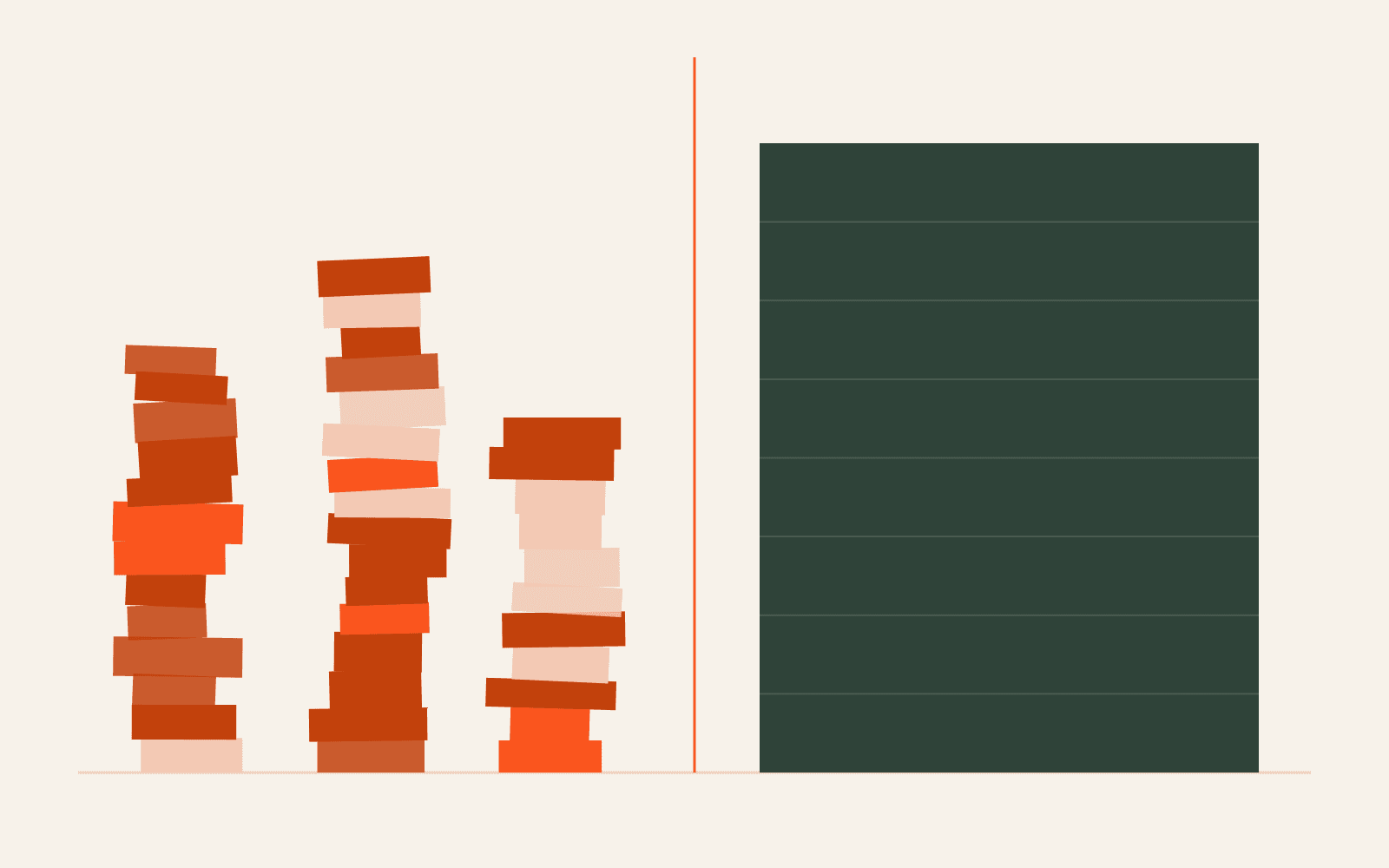
3-year savings: $1,878,945. A 65% cost reduction.
Note on residual time: NeuBird AI gates every action behind human-in-the-loop approval, so oversight time does not go to zero, and this model does not pretend otherwise. The 5% assumption reflects approval and review, not investigation.
Hidden Costs: What Doesn't Show Up on a Token Invoice
| Hidden Cost | DIY Agent | NeuBird AI |
|---|---|---|
| Signal quality | Inherits the existing alert queue | Agentic instrumentation generates the right signals |
| Centralized learning | Each team starts from zero | Learns from every deployment, stays in your environment |
| Knowledge on turnover | $75,000 per rebuild | $0 |
| Inference cost control | Uncurated context, loops burn budget in hours | Curated context and data-side pre-filtering by design |
| Governance and audit trail | Manual, each team builds its own | SOC 2 Type II, no bulk retention, full audit trail, human-in-the-loop on every action |
| Cross-team duplication | 4 separate agent instances | 1 platform, shared context |
| Maintenance after API changes | 2 to 4 weeks of eng time per year | Vendor-managed |
| Incident continuity | Each investigation starts fresh | Full history and pattern matching |
The Bottom Line
DIY agents are a great way to learn. They are a poor way to operate at scale, and the reason is not that they are hard to build. It is that they are pointed at the wrong layer. An agent that reads your alert queue inherits every flaw in it.
The pattern I see across every mature infrastructure organization is the same: start with experimentation, recognize the ceiling, and move to a platform that fixes the underlying issue rather than patching the alert, one that compounds what it learns across the organization instead of trapping it in individual instances.
Build where it differentiates you. Buy where it operates for you. And be honest about which is which.
The companies that get this right will not just have better AI. They will have a prevention posture they can take to the board, engineering leaders who are not managing a recovery story every quarter, and teams that spend their time building the future instead of babysitting the present.
Frequently Asked Questions
What is the real cost of a DIY AI SRE agent?
Beyond model and inference fees, the real cost is SRE time: building and maintaining the agent, reviewing its outputs, and rebuilding institutional knowledge every time an engineer leaves. In our 3-year model, those hours account for nearly 90% of total DIY cost, not the tokens.
Should we build our own AI agent for incident response?
Build it if AI-driven incident response is genuinely your competitive advantage and you can commit budget and headcount for a multi-year lifecycle. Buy a platform if it is an operational necessity every company your size needs, since that is where a purpose-built system compounds learning that a single team's prototype cannot.
Why do DIY agents fail to scale across teams?
Each DIY deployment is a separate project: different infrastructure, different runbooks, no shared learning between teams. A platform that learns from every deployment across its customer base scales in a way an individual team's script never can.
Does a DIY agent reduce SRE workload?
Not in practice. It shifts toil from investigating incidents to babysitting the investigator: feeding it context, tuning prompts, reviewing outputs, and fixing it when the model provider's API changes.
Ready to see what changes when the agent fixes the signal instead of chasing it? Book a walkthrough of the Production Ops Agent in your environment.
Venkat Ramakrishnan is President and COO of NeuBird AI, which builds the Production Ops Agent: it prevents incidents before the page, resolves them in minutes when they happen, and operates production in between.