The DIY Trap: Building a Production Ops Agent on Claude
Building a production operations agent on Claude demos beautifully but inherits your existing alert noise. Here is why the model is the easy part, and what a real production-grade agent actually requires.

A weekend project is now enough to make a smart engineer dangerous. Point a capable model like Claude at your alerting stack, wire in a few MCP connections, and within a sprint you have something that reads a PagerDuty alert, pulls a few logs, and drafts a plausible root cause. It demos beautifully. It feels like the future. And for a lot of engineering leaders, it raises an honest question: if we can build this ourselves, why would we buy it?
It's a fair question, and it deserves a real answer rather than a sales reflex. The honest version is this. The model is not the hard part. The hard part is everything around the model, and that is exactly the part a DIY build tends to skip until it is expensive to discover. If you are weighing a home-built agent against The Production Ops Agent from NeuBird AI, the decision is not "our engineers versus their engineers." It is "a great model bolted onto your existing noise versus a system engineered to fix the underlying issue." Those are not the same bet.
The demo is not the job
The reason a DIY agent demos so well is that a demo is a curated moment. You pick an incident you already understand, feed the agent clean context, and watch it narrate a conclusion you could have reached yourself. Production is the opposite of curated. It is thousands of alerts a day, most of them not worth waking anyone for, arriving from systems that were never designed to tell a coherent story together.
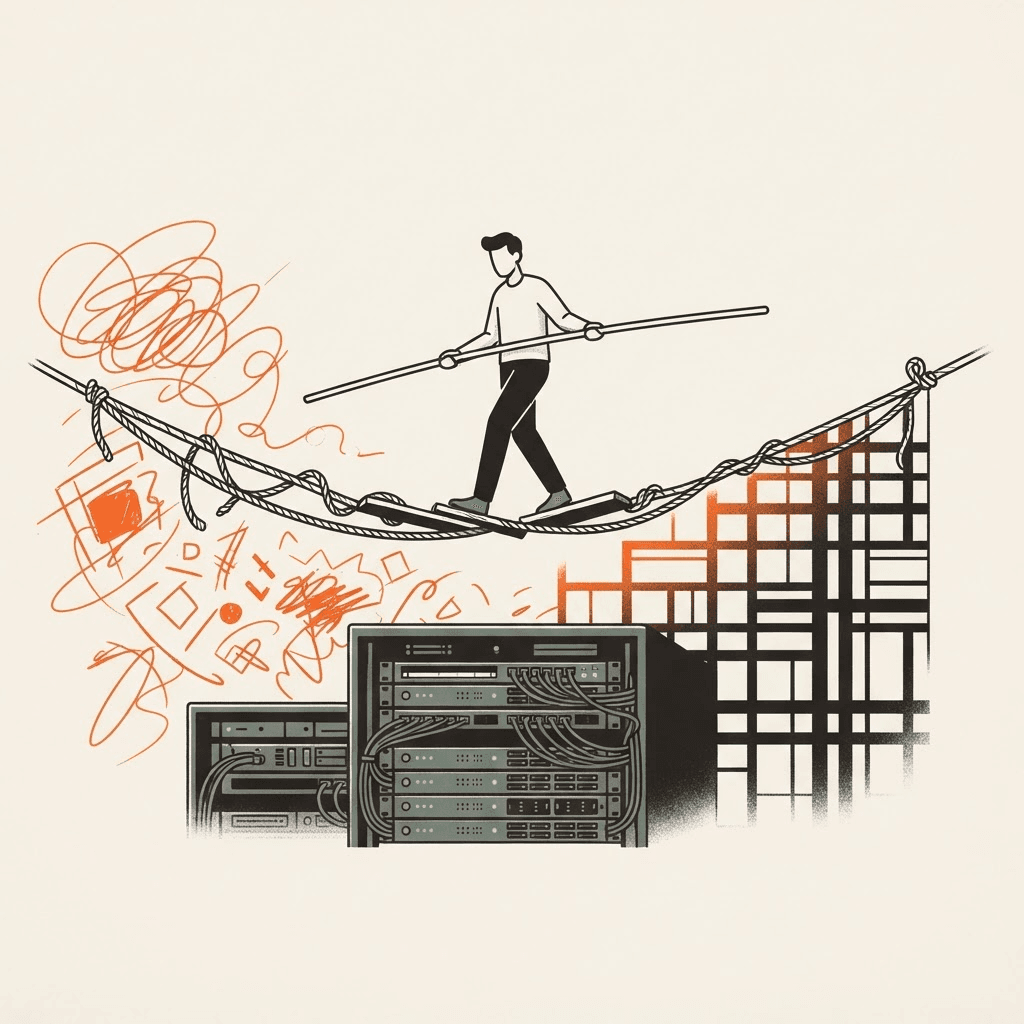
This is the trap, and it has a name: DIY on noise is still noise. Your homegrown agent inherits the same alert queue your team already drowns in.
A reactive agent pointed at a noisy queue does not change any of it. It reads the same signal, hops the same tools, and chases the same false leads. It just does it faster. You have automated the symptom, not the disease. Our own 2026 State of Production Reliability and AI Adoption Report, built from more than a thousand practitioners, found that 77% of on-call teams field at least ten alerts a day and 80% of them say half or fewer are actionable. During a live incident, 83% of teams move across four or more tools, and 41% work through seven or more. A reactive agent pointed at that queue does not change any of it. It reads the same noisy signal, hops the same tools, and chases the same false leads. It just does it faster. You have automated the symptom, not the disease.
That distinction is the whole argument. Two decades of tooling got very good at showing engineers what is wrong and left the acting to people. The instinct now is to close that gap by bolting an agent onto the alert queue. But the leverage was never in responding to alerts faster. It is upstream, in deciding which alerts should exist at all.
The model is the easy 20%
Here is the part that is genuinely uncomfortable for a build-it-yourself plan. Claude is excellent. That is precisely why leaning on the model is not a differentiator. When the reasoning engine is a commodity you can rent by the token, the value does not live in the model. It lives in what you feed it and how you govern what it does.
The missing capability in production operations is contextual reasoning: taking a symptom, pulling the relevant evidence from across every connected system, and arriving at a probable cause with the work shown. A model cannot do that on its own. It can only reason over the context it is handed. So the real engineering problem is context: assembling the right evidence, from the right sources, at the moment of the investigation, and doing it accurately enough to trust and cheaply enough to run thousands of times a day. That is the part the demo hides and the part a DIY build discovers slowly, one production surprise at a time.
There is a cost dimension here that catches teams off guard. The naive approach is to feed more raw data into the prompt, the whole database, the full log stream, in the hope that more context means better answers. At production scale that is a financial cliff. Token overhead and uncurated data ingestion turn a clever prototype into a line item that grows with your incident volume. Our co-founder Vinod Jayaraman puts it plainly: a good agent has to be four things at once, cost-efficient, fast, accurate, and secure, and teams routinely underestimate cost. The fix is doing the heavy lifting on the backend, pre-filtering data so the agent only processes the context it actually needs. Token efficiency is the new engineering efficiency. A DIY agent that dumps raw data into the model is optimizing for the demo and quietly signing up for a bill that scales the wrong way.
What a real production agent actually requires
Strip away the excitement and a production-grade agent has to solve four hard problems at once, and the model solves none of them for you.
It has to generate a clean signal in the first place. NeuBird AI does this through agentic instrumentation: rather than leaving your team to hand-wire telemetry and tune static thresholds, it instruments the environment to produce high-signal telemetry, then uses sentinel scanning to catch degradation that is trending toward failure, including the failures that never trip a threshold at all. In the survey, 78% of teams reported an incident where no alert fired and a customer noticed first. You cannot fix that by responding to alerts faster. You fix it by generating the right signals upstream. That is the difference between fixing the underlying issue and patching the alert.
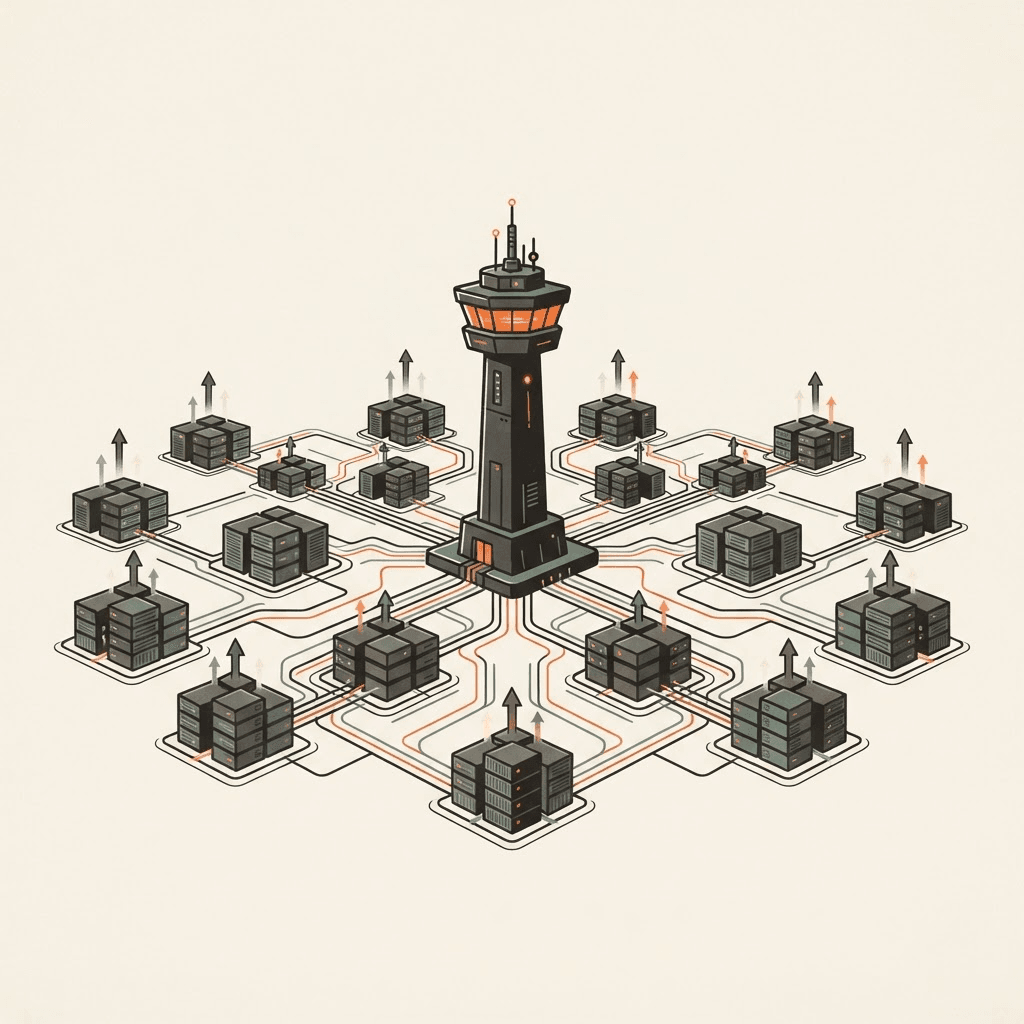
It has to reason across everything, not one tool. NeuBird AI queries more than fifteen monitoring backends in parallel in a single investigation, across metrics, logs, traces, events, and config, and delivers a root-cause analysis in under five minutes at 94% accuracy, with an audit-ready causal chain shown at every step. Not coincident metrics, the actual causal chain. A DIY agent can query a few sources you thought to connect, but breadth and accuracy at that level is a system, not a script.
It has to be safe to put in front of production. This is where home-built agents tend to stall, because the last mile is governance, not intelligence. NeuBird AI is SOC 2 Type II certified, stores nothing, runs entirely inside your environment including on-prem and air-gapped, gates every action behind human-in-the-loop approval, and keeps a full audit trail. Reproducing that architecture, and keeping it certified, is a program of work with no glory and no end date.
And it has to compound. The Prod Ops Agent learns your topology, your runbooks, and your fixes, so the longer it runs the more it knows, and that knowledge stays in your environment. A weekend build starts from zero on every incident. An agent that gets sharper on your specific environment every week is a fundamentally different asset.
The context engine is the product
If the model is rented and commoditized, the durable advantage in production-ops AI belongs to whoever builds the best context layer between the model and the live environment. That is what NeuBird AI is. The agentic context engine is the part that turns a capable model into a trustworthy operator: it does the data-side work of pruning noise, closing instrumentation blind spots, and assembling curated context for each investigation, so the reasoning stays both accurate and affordable at production scale.
This is also why the build-versus-buy math rarely favors DIY once you account for the whole job. A prototype is one engineer and a good week. A context engine is a moving target that has to keep pace with 50-plus integrations, new failure modes, changing cost dynamics, and a security posture you can put in a contract. Every hour your best people spend maintaining an in-house agent is an hour not spent on the roadmap, and the roadmap is the reason you hired them.
What you actually get to show the board
Step back from the architecture and the leadership case is simple. A DIY agent, at its very best, gives you a faster response to incidents you are still having. The Production Ops Agent changes which incidents happen at all. It catches degradation 30 to 60 minutes early and cuts P1 war rooms by 80%, so the story you carry to the board is a prevention posture, not a recovery story. When something does break, it resolves autonomously in minutes rather than pulling three engineers into a war room. And between incidents it keeps cutting cost and capturing every fix, at roughly 10% of the cost of the alternatives.
That is the real choice. You can spend your team's scarcest capacity rebuilding the plumbing around a model, and end up with a faster way to chase the same noise. Or you can put a platform of specialized agents, orchestrated as one Production Ops Agent, on top of the environment you already run, and get your best people back on the roadmap.
Claude is a remarkable model. Building on it is a reasonable instinct. But a remarkable model pointed at a broken alert queue is still bounded by the queue. The leverage is upstream, in fixing the underlying issue, and in the context engine that makes that possible. That is not a weekend project. That is the product.