A Model Is Not an Agent
The enterprise AI model wars miss the point. A foundation model is the brain, not the body. Here is what actually makes a production operations agent work.

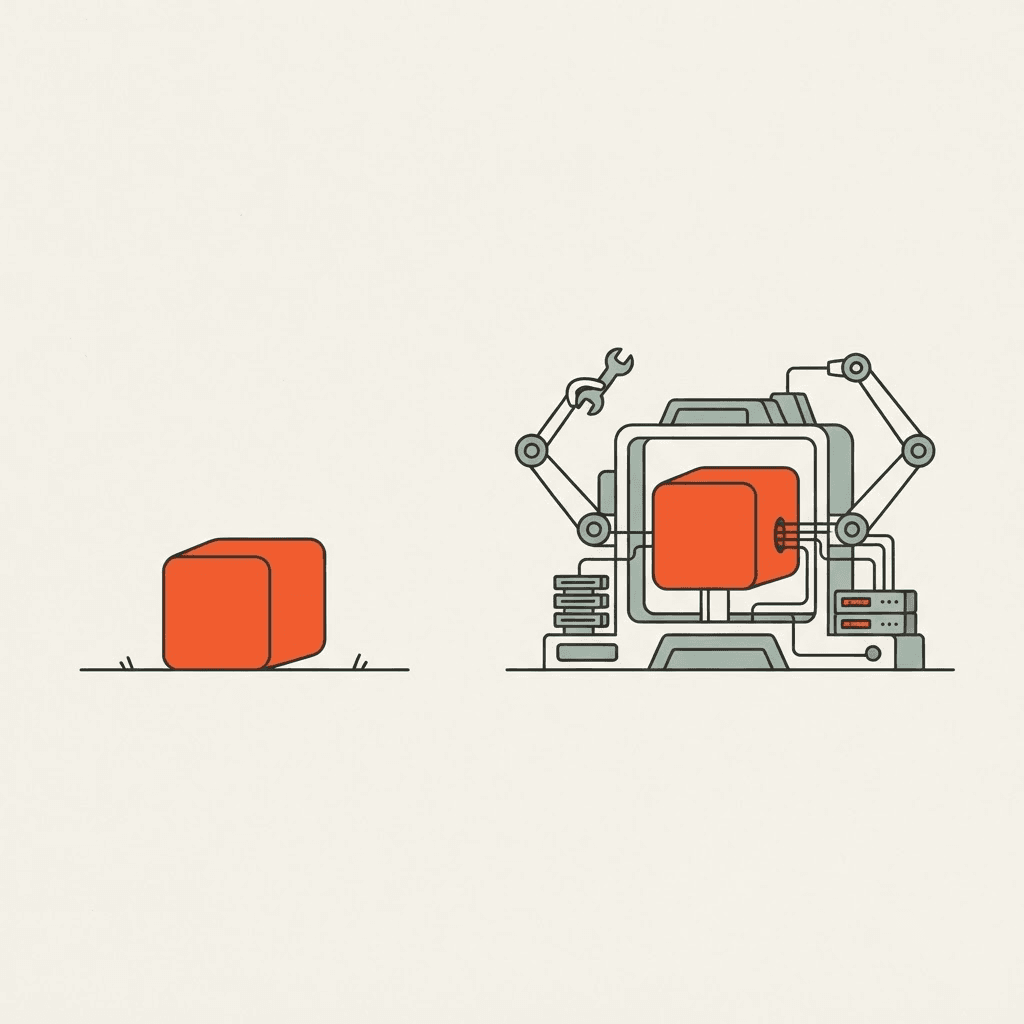
It takes more than a smart model to keep production running.
Every enterprise AI conversation in 2026 starts the same way: which model are you using?
GPT? Claude? Gemini? Llama? The assumption is that if you pick the right model, you get the right outcome. The smarter the model, the better the agent.
This is wrong. And it is costing enterprises millions in failed AI projects.
The model is the brain. It is not the body.
A foundation model can reason, summarize, and generate. What it cannot do is act on your infrastructure with the context it needs to act correctly. It does not know your topology. It does not know which service talks to which database. It does not know that the last time someone restarted that pod in production, it took down the payment pipeline for 47 minutes.
An agent needs all of that. It needs context, memory, judgment, guardrails, and the ability to execute safely in a live environment. The model is one component. Without everything around it, it is a very expensive chatbot.
The context problem nobody talks about
Here is what actually happens when an enterprise tries to build a production operations agent on a foundation model alone.
The model gets an alert. It does not know where the alert came from, what the blast radius is, or what changed. It does not have the runbook the senior SRE wrote two years ago and buried three levels deep in Confluence.
So it guesses. Or it asks a human. Or it hallucinates a plausible answer that is completely wrong for this environment.
But there is a deeper problem, and it sits upstream of the model entirely: the alert itself. 83% of teams move across four or more tools during a single incident, and most of the alerts they are chasing were never worth a page. A smarter model pointed at a noisy alert queue just chases the noise faster.
The model is not the bottleneck. The signal is.
Fix the underlying issue, don't just patch the alert
This is the part the model-wars conversation misses. The leverage is not in answering the page faster. It is in changing which pages fire at all.
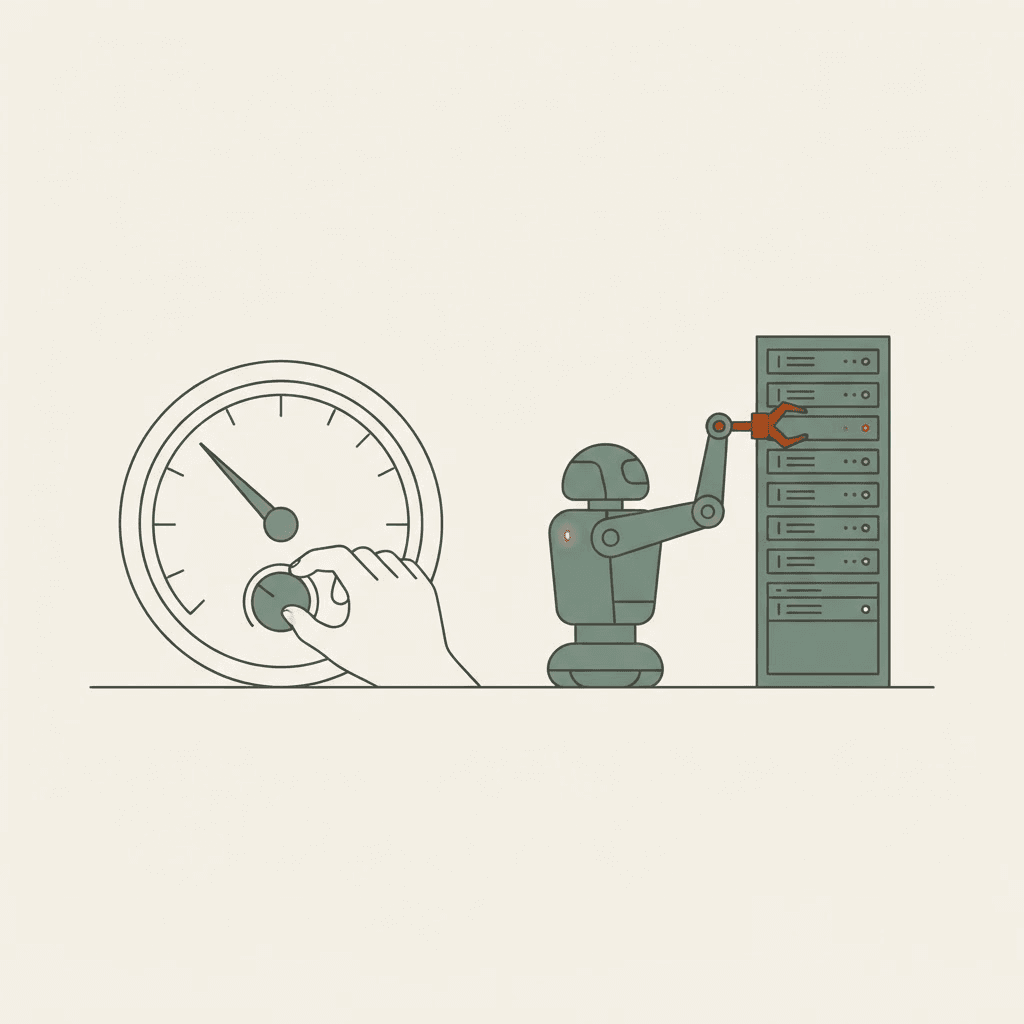
That is what NeuBird AI does through agentic instrumentation. Instead of leaving your team to hand-wire telemetry and tune static thresholds, NeuBird AI instruments the environment, generates the right signals, and catches degradation before a threshold trips, including the failures that never fire an alert at all. The model reasons over that signal. It does not manufacture it.
Grounding matters just as much when something does break. Every action the Prod Ops Agent takes is grounded in the full operational context of that specific environment at that specific moment: 15+ monitoring sources queried in parallel, from logs, metrics, and traces to topology, change history, and runbooks. That is how it delivers a root cause in minutes instead of a plausible guess. The model reasons over the context. It does not replace it.
Why "build it yourself" fails
The most common response from engineering leaders is: we have smart engineers, we will build our own. They pick a model, wire it to a few APIs, and demo it on a golden-path scenario. It looks great in the conference room.
Then it hits production. The edge cases multiply. The context windows overflow. The guardrails do not exist. The audit trail does not exist. The agent does something unexpected at 3am and nobody knows why.
Six months and several million dollars later, the project quietly gets shelved.
And even the ones that ship hit the same ceiling. A homegrown agent bolted onto the existing alert queue inherits every bad alert already in it. DIY on noise is still noise.
Building a working agent is not a model problem. It is an engineering problem. It takes a context engine that ingests and correlates heterogeneous sources in real time, a way to generate high-signal telemetry instead of consuming noisy output, a skills framework that executes safely behind human-in-the-loop approval, and an architecture that enforces enterprise governance from day one.
What actually makes an agent work
If you are evaluating AI agents for your operations, stop asking "which model does it use?" and start asking:
How does it build context? Can it correlate telemetry across your entire stack in real time, or does it only see what you feed it?
Does it improve the signal, or just consume it? Does it instrument your environment and decide what is worth a page, or does it inherit the same noisy alert queue your team already drowns in?
How does it act safely? Is every action gated by human-in-the-loop approval, with a full audit trail, SOC 2 Type II, and zero data stored, running inside your own environment? Or is it a model with API access and a prayer?
How does it learn? Does it get sharper from every incident in your environment, or start from zero every time?
How fast can it deliver value? Can you go live in minutes, or does it need months of training and tuning?
The answers to these questions matter far more than the model sitting underneath.
The punchline
The AI model wars make for great headlines. But for enterprise leaders trying to solve real problems in production, the model is table stakes. The differentiator is everything around it: the signal, the context, the actions, the guardrails, and the judgment to know when to act and when to ask.
That is the whole idea behind The Production Ops Agent. It keeps your production running, so your engineers don't have to.
A model is not an agent. Not even close.
Venkat Ramakrishnan is President and COO of NeuBird AI.