AI in Observability Has a Context Problem
A recent PulseMeter study found that AI adoption in observability is growing, but most organizations still lack the operational context required for AI to drive meaningful action.

A recent PulseMeter study conducted by The Futurum Group and Techstrong for NeuBird AI surveyed qualified observability practitioners to understand where AI is delivering value and where it is falling short. The findings were clear: "AI adoption is growing, but most organizations still lack the operational context required for AI to drive meaningful action."
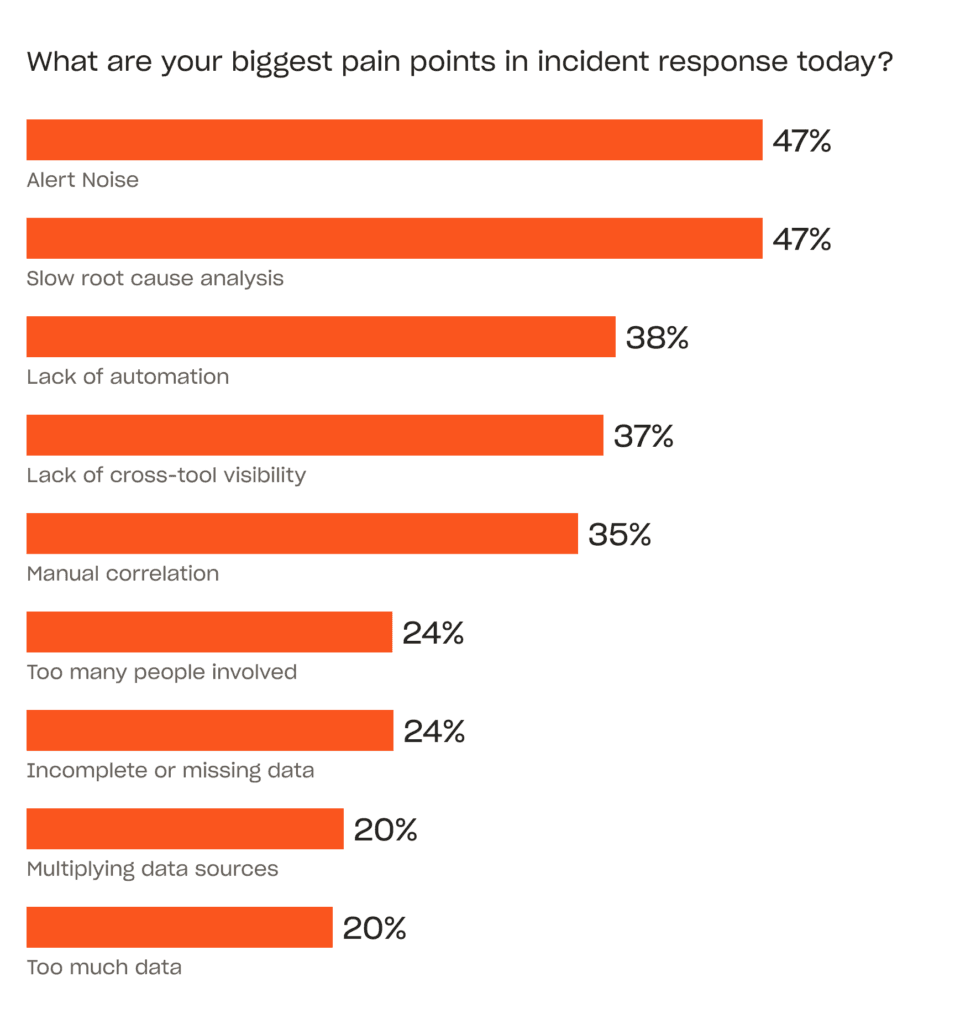
The study found that incident response is no longer just a tooling problem. It is increasingly a context problem. Teams are overwhelmed by alert noise, slow root cause analysis, fragmented visibility across systems, and manual correlation between tools and workflows. In other words, the issue is not a lack of telemetry. It is the inability to connect signals fast enough to understand what changed, what is impacted, and what to do next.
Key Takeaways
- AI adoption in observability is real, but still early. Most teams are using AI for investigation assistance, not autonomous remediation.
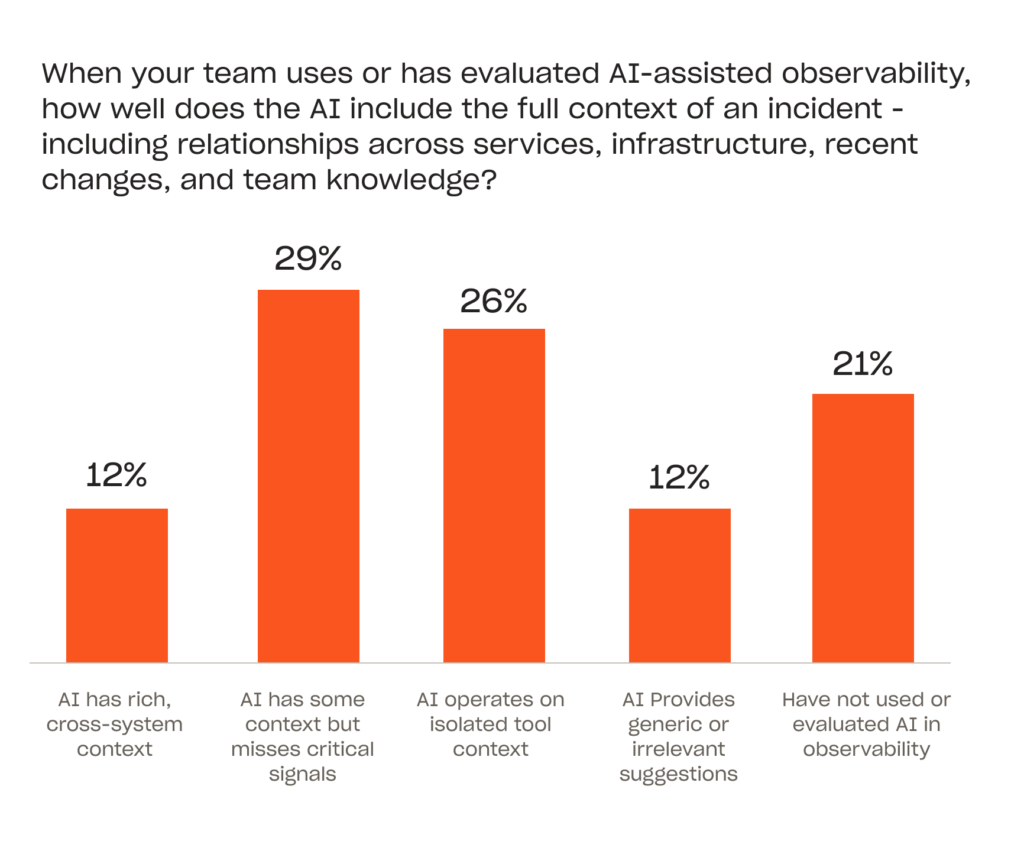
- Context is the biggest barrier to AI effectiveness. Only a small percentage of respondents said their AI tools have rich, cross-system operational context.
- Teams are struggling with fragmented operational visibility. Alert noise, manual correlation, and slow root cause analysis remain major operational pain points.
- The top production risks identified in the study were configuration drift, infrastructure issues, and lack of system visibility. All three are fundamentally context problems.
- Human oversight still matters. Most respondents are open to AI-driven operational action, but prefer human approval and explainability before execution.
One of the more important findings in the study focused on production risk. Respondents identified configuration drift, infrastructure issues, and lack of system visibility as the leading operational risks impacting modern environments.
This matters because traditional observability platforms were largely built to collect and visualize telemetry, not continuously understand operational context across constantly changing environments.
For example, traditional tools may detect CPU spikes, increased latency, or failed requests, but they often struggle to answer higher-level operational questions such as:
- Which deployment, configuration change, or infrastructure update introduced risk?
- What changed before the incident started?
- How are seemingly unrelated services connected?
- Which downstream systems are impacted?
- Is this an isolated alert or part of a larger operational pattern?
Configuration drift is a good example. Modern cloud environments change constantly through deployments, autoscaling activity, infrastructure updates, policy changes, and service modifications. Traditional observability tools can surface symptoms after performance degrades, but they often lack the operational context needed to connect those symptoms back to the actual change that introduced risk.
What Did the PulseMeter Study Find About the AI Context Gap?
What stood out most in the research was the role of context itself. According to the study, "only 12% of respondents said the AI tools they use have rich, cross-system context." The overwhelming majority either have not adopted AI yet or believe current AI lacks sufficient understanding of relationships across infrastructure, services, deployments, telemetry, and operational workflows.
That finding reinforces a major challenge for the industry. AI cannot simply be layered onto fragmented observability environments and expected to produce trusted operational outcomes.
Without operational context, AI may summarize alerts or identify anomalies, but it cannot reliably investigate causality, correlate changes across systems, understand dependencies, or recommend confident next steps.
This is exactly the problem NeuBird AI was designed to solve.
How Does NeuBird AI Solve the Operational Context Gap?
NeuBird AI's Production Ops Agent continuously builds operational context across telemetry, infrastructure, dependencies, configuration changes, historical incidents, and cloud services. Instead of treating metrics, logs, traces, and changes as isolated data points, NeuBird AI correlates them into evidence-based investigations that help teams understand not just what failed, but why it failed and what changed.
This context-driven approach becomes especially important as organizations introduce AI into operations.
AI without context can summarize alerts. AI with context can investigate relationships, identify likely root cause, detect drift, understand dependencies, and guide teams toward trusted operational action.
That distinction is becoming increasingly important as enterprises push toward proactive operations. The study found many teams still remain heavily reactive, consumed by incident response and operational firefighting.
The opportunity moving forward is not simply adding more AI into observability stacks. It is building AI systems capable of understanding the broader operational environment in real time.
That is where context engineering becomes critical, and where NeuBird AI has been focused from the start.