Like Cursor, but for SREs
NeuBird AI is an AI-native SRE solution that brings Cursor-like agentic workflows to operations teams for incident investigation and response.

If you’re a software engineer, Cursor needs no introduction. It is reshaping how we write, test, debug, and ship code. Cursor was built for developers from the ground up. It indexes entire codebases, generates functions, refactors modules, and writes tests with minimal hand-holding. Its deep context-awareness is what makes it feel less like a tool and more like a teammate.
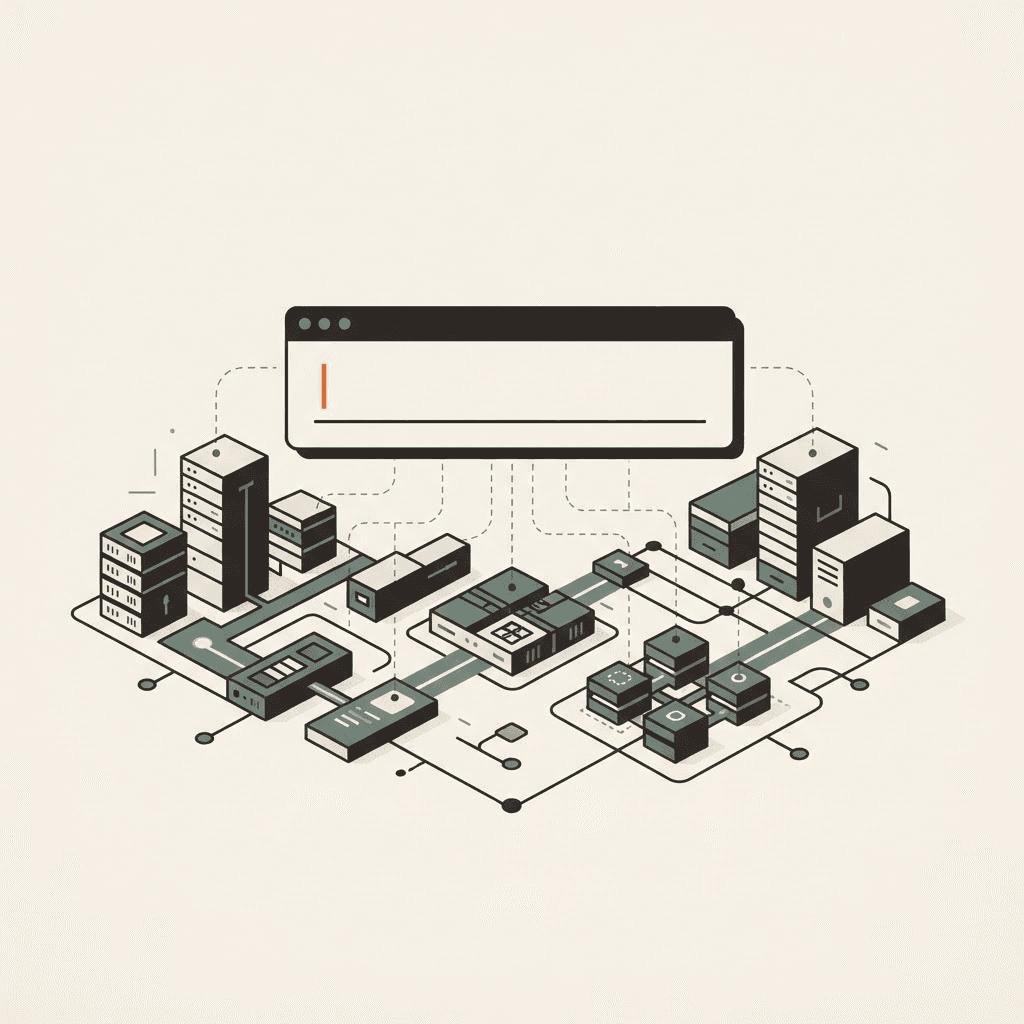
But what about the “other side” of the engineering org? The Site Reliability Engineers, DevOps Engineers, Platform Engineers, and Engineers who are on-call to keep production code running while developers constantly innovate and ship new features? That's where NeuBird AI comes in. We provide the AI-native SRE solution, bringing a Cursor-like agentic workflow to operations teams. Here is how we do it: Telemetry Indexing Similar to how Cursor indexes your entire codebase, NeuBird AI indexes your observability data. It connects to monitoring tools, incident management platforms, communication tools, and cloud providers to build an understanding of your infrastructure topology, service dependencies, tribal knowledge, and historical incident patterns. Agentic Incident Response NeuBird AI’s agentic workflow follows a strategic process:
- Dynamic Investigation Planning: Formulates an investigation plan, adapting based on retrieved historical context and the specifics of the current incident.
- Secure Telemetry Query Generation: NeuBird generates structured telemetry queries in a common syntax, ensuring reliable data access regardless of the underlying data source.
- Secure Data Processing: Queries execute in a secure, ephemeral runtime environment. Your telemetry data is not used to train the LLM, and NeuBird does not retain it in bulk.
- Iterative Refinement: Refines its analysis based on each round of data retrieval, adapting to new information.
- Root Cause Analysis and Remediation: The final output includes correlated signals, identified root cause, and actionable remediation steps.
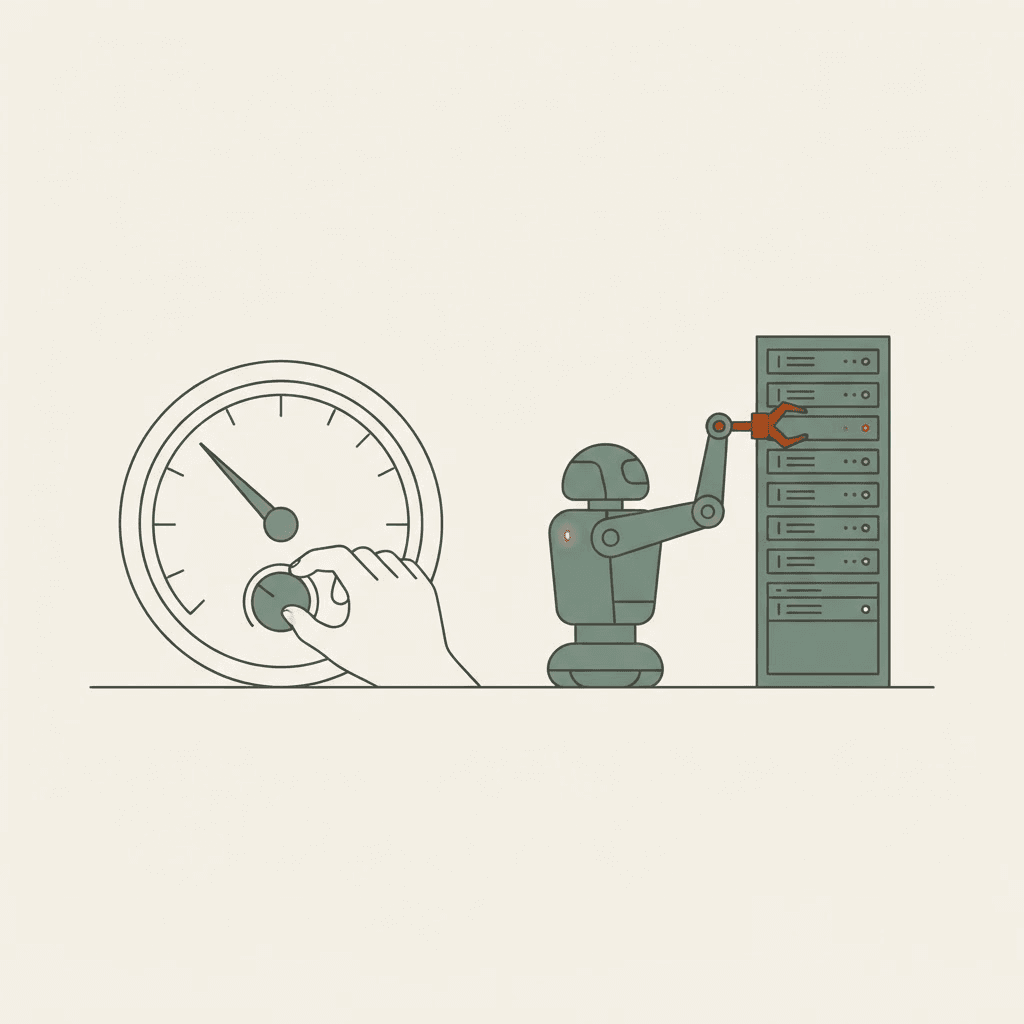
The Autonomy Slider Like Cursor's autonomy slider, NeuBird AI offers varying degrees of automation. At its most basic, it functions as an investigative assistant that provides pre-analyzed context to on-call engineers. At its most autonomous, it can leverage coding agents to automate remediation steps, with human-in-the-loop controls to verify production changes. NeuBird AI covers all areas of incident response, from alert triage to resolution.
What Do Cursor and NeuBird AI Have in Common for Engineering Teams?
1. Deep Contextual Understanding
| Cursor | NeuBird AI | |
| What it indexes | Your entire codebase: files, AST, dependencies, git history, PR summaries | Your entire observability ecosystem: metrics, logs, traces, topology, incident history |
| What it understands | Code structure, dependencies, patterns, architecture, team conventions | Infrastructure topology, service dependencies, historical incident patterns, change events |
| Context retrieval | Natural language queries matched to relevant code chunks | Incident signals matched to relevant historical investigations and runbooks |
Cursor doesn't just see files in a directory. It understands that a change to your authentication module affects your API gateway, your middleware, and your test suite. NeuBird AI doesn't just see CloudWatch alarms. It understands that a CPU spike on your EKS cluster correlates with a deployment event from 45 minutes ago that changed a database connection pool setting affecting downstream services.
2. Agentic Workflows
| Cursor | NeuBird AI | |
| Trigger | Developer prompt or task description | Alert from PagerDuty, Datadog, CloudWatch, or manual investigation |
| Planning | Multi-step plan with file paths, code references, and a to-do list | Dynamic investigation plan informed by historical patterns and current incident signals |
| Execution | Edits files, runs terminal commands, executes tests, inspects browser output | Generates telemetry queries, correlates signals across platforms, identifies root cause, and presents executable remediation steps |
| Iteration | Re-runs tests, fixes errors, refines until code works | Refines analysis based on each round of data retrieval, adapts to new findings |
Cursor's Agent mode plans multi-step changes, executes them across files, runs tests, and iterates until the code works. NeuBird AI's agentic workflows do the same for incidents. When an alert fires, NeuBird AI automatically queries relevant data sources, correlates signals across platforms, identifies root cause, and delivers actionable remediation steps. The key similarity is the closed-loop nature of both systems. Neither tool generates a response and walks away. They execute, observe the results, and adjust their approach iteratively until the objective is met.
3. Works With Your Existing Tools
| Cursor | NeuBird AI | |
| Foundation | Fork of VS Code: familiar UI, extensions, keybindings carry over | Integrates with tools already in your stack, no rip-and-replace |
| Ecosystem | VS Code extensions, Git, GitHub, terminal, MCP servers | Datadog, Splunk, Prometheus, CloudWatch, PagerDuty, ServiceNow, Slack, Jira, Grafana, MCP servers, and more |
| Marketplace | Downloadable on major OS | Available on AWS and Azure Marketplace |
| Setup | Install and open a directory as a project | Connect via API keys, setup in under 10 minutes |
Cursor is based on VS Code because that's where developers already work. They keep their extensions, keybindings, and muscle memory. NeuBird AI integrates with the tools you already run: Datadog, PagerDuty, Slack, ServiceNow, because rip-and-replace doesn't work for production infrastructure. Both tools meet you where you are.
4. Enterprise-Grade Security
| Cursor | NeuBird AI | |
| Certification | SOC 2 Type II | SOC 2 Type II |
| Data retention | Privacy Mode with zero-retention agreements with all LLM providers | Zero persistent data storage; telemetry processed in real-time in-memory and discarded after use |
| Code/data exposure | Raw source code never stored on servers; only obfuscated metadata persisted (In Privacy Mode) | Telemetry is not used to train the LLM and NeuBird does not retain it in bulk; raw telemetry never leaves your environment |
| Deployment | Cloud-based with privacy controls | SaaS, VPC, or on-prem deployment |
| Access model | SAML SSO, SCIM provisioning, RBAC, admin-enforced privacy | Read-only access to telemetry, RBAC, SSO/SAML, audit trails |
| Encryption | AES-256 at rest, TLS 1.2+ in transit | Enterprise-grade encryption in transit and at rest |
| Training policy | Your code is never used to train models | Your data is never used to train models |
Cursor offers SOC 2 Type II compliance, Privacy Mode with zero-retention, and sandboxed execution environments. NeuBird AI is SOC 2 Type II certified, offers VPC deployment, uses read-only access to your telemetry, and does not retain your telemetry in bulk. For operations teams, the security story is arguably even more critical. Telemetry data can contain customer PII, financial transactions, authentication tokens, and other sensitive information. NeuBird AI’s read-only architecture keeps all raw data within your existing infrastructure. To precisely retrieve relevant information, NeuBird AI generates structured queries that the secure data access layer translates into platform-specific API calls. Data flows back through the secure processing layer, where the analysis happens. None of that telemetry is used to train the language model.
How Is Agentic AI Transforming the SRE Operations Tooling Stack?
Just as Cursor is specialized to handle complex codebases and enable agentic workflows for programming, NeuBird specializes in handling complex issues in production-grade environments through agentic workflows for incident response. Your developers probably don't use Stack Overflow anymore. So why should your operations team use antiquated telemetry dashboards, stale runbooks, and cobbled together AI tools? Before you decide to create a 'Cursor' for your ops team in-house, be sure to read "The Harsh Truth: Why Most DIY IT Agents Collapse in Production". The developer tooling revolution is well underway. The operations tooling revolution is just getting started. If your SRE team is spending more time investigating incidents than building for reliability, Book a demo and see how AI-native operations tooling changes the way you work.